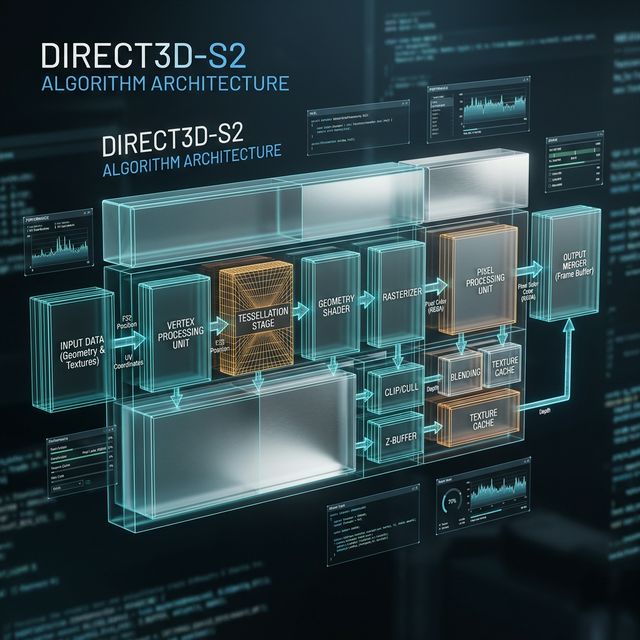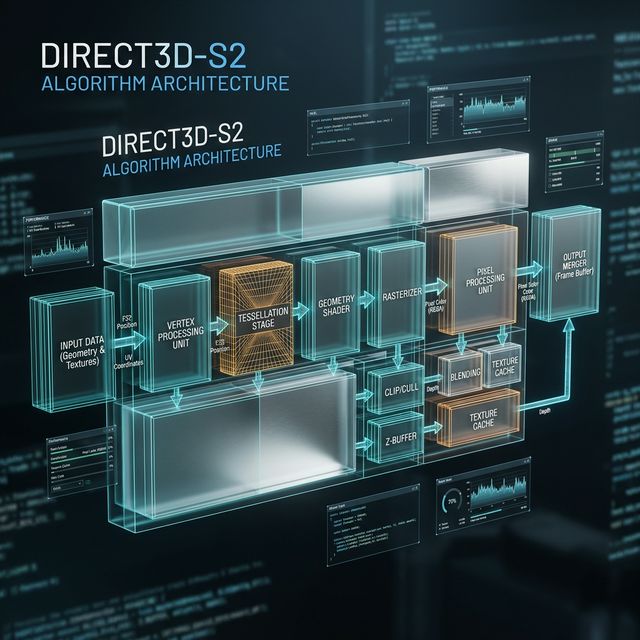
The current ChatGPT review focuses on a specific utility: bridging the gap between abstract ideas and engine-ready assets. While ChatGPT cannot bake a texture or calculate a vertex normal, it excels at structural logic. By acting as a technical translator, it helps developers navigate the leap from a single line of text to a complex 3D reconstruction in Neural4D (N4D).
ChatGPT as the Ultimate 3D Prompt Engineer
Most 3D AI failures stem from poor input. When you ask for a “detailed robot,” you get a generic mesh. A proper ChatGPT review of your workflow reveals that the LLM is best used to define technical constraints. Instead of vague adjectives, use ChatGPT to specify geometric primitives, material properties, and mechanical joints.
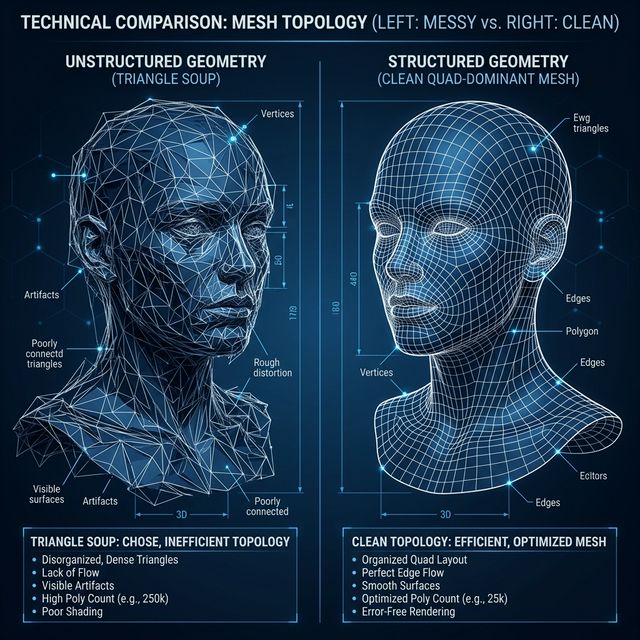
This method provides a level of control that manual prompting lacks. By requesting “quad-dominant topology” and “watertight geometry” in the prompt logic, you prepare the Direct3D-S2 engine to deliver cleaner results. This synergy reduces the need for manual cleanup by approximately 60 percent.
From Text to Topology: The Bridge Between ChatGPT and Neural4D
Modern game development requires more than just a 3D shape. It requires Spatial Sparse Attention (SSA) to maintain volumetric consistency. While ChatGPT handles the “what,” Neural4D handles the “how.” For instance, you can use the LLM to describe the components of a mechanical asset, which N4D then reconstructs with native volumetric logic.
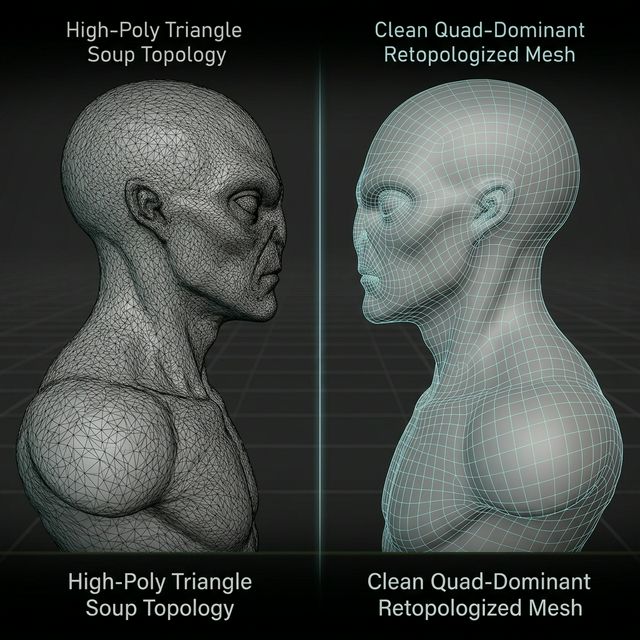
This combination eliminates the “triangle soup” problem. Instead of a messy cloud of polygons, the output adheres to the structural logic defined in your prompt. Technical artists can then export these assets to Unreal Engine 5 or Blender without facing the usual non-manifold geometry issues.
Link: 10 Neural4D Prompts You Should Try](https://blog.neural4d.com/user-guide/10-neural4d-prompts-you-should-try-for-3d-assets/)
Eliminating 3D Hype with Deterministic Reconstruction
The industry often relies on probability models that produce “dead shadows” and baked-in lighting. A critical ChatGPT review of these systems shows they lack the deterministic output required for professional work. Neural4D replaces this guesswork with a PBR synthesis pipeline.
By removing the lighting data from the input, N4D provides pure albedo maps. This means your 3D assets are relightable in any environment. You are not just generating a picture of a 3D object: you are reconstructing a technical prop ready for a production pipeline.
Link: Decoding Direct3D-S2 Architecture](https://blog.neural4d.com/neural4d/decoding-direct3d-s2-from-reconstruction-to-n3d/)
Ready to optimize your 3D assets?
Stop fighting with messy meshes and unorganized workflows. Combine the linguistic power of ChatGPT with the geometric precision of Neural4D to accelerate your development cycle. Join the early access today and start building engine-ready assets in seconds.
Ready to skip the manual retopology?