The Meshy vs Neural4D choice often dictates the efficiency of a studio pipeline. While the industry is flooded with fast generators, the technical gap between “prototype” and “production” is widening. This analysis moves past surface-level visuals to examine the underlying geometric logic and the role of conversational AI in professional workflows.
Beyond Post-Processing: The Power of Native Direct3D-S2
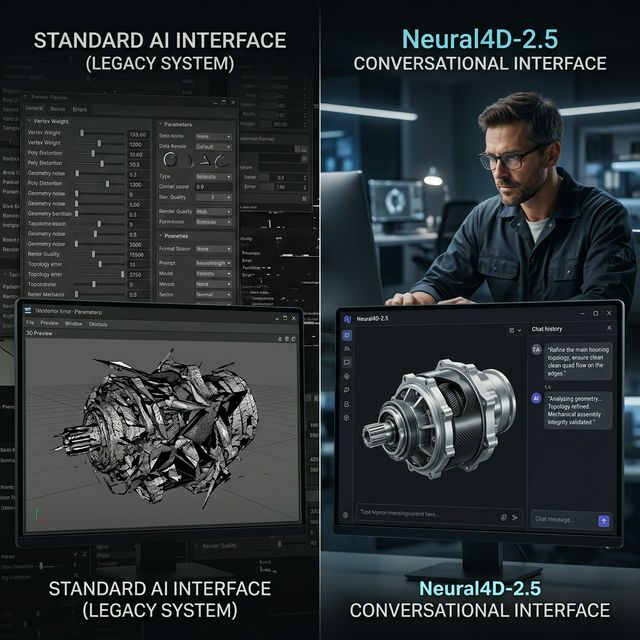
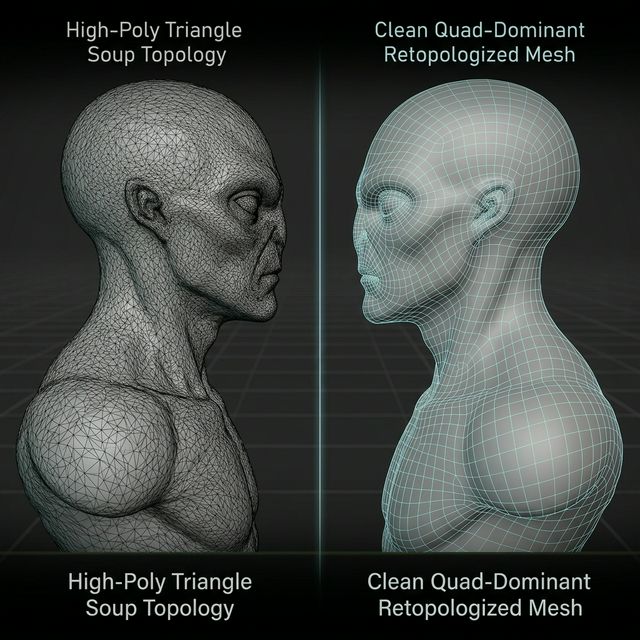
A common workflow in the Meshy vs Neural4D landscape involves generating a mesh and then using local tools to “fix” it. Meshy-3 provides sliders for polycount and remeshing tools to optimize the output after the model is baked. While useful for rapid ideation, this approach relies on post-processing to hide topological flaws.
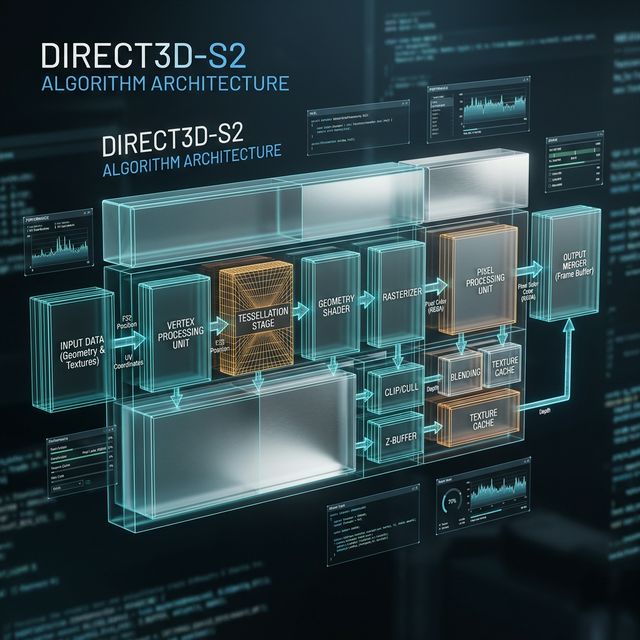
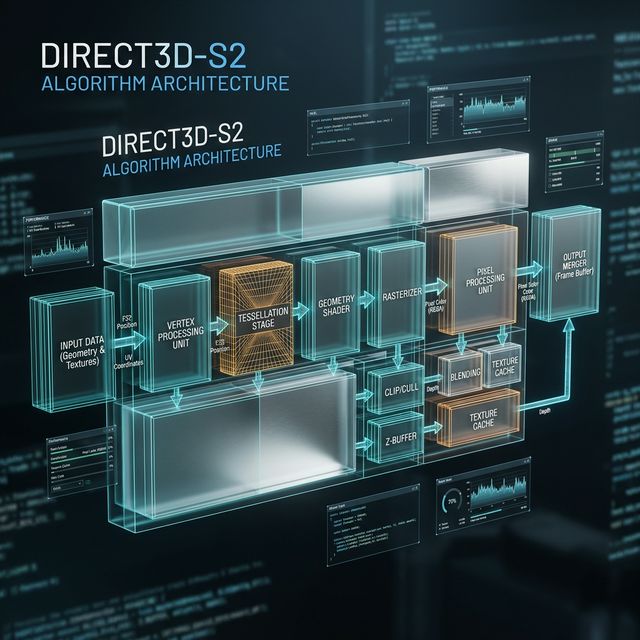
Neural4D (N4D) utilizes the Direct3D-S2 architecture to solve topology at the source. Instead of fixing a messy mesh, the system uses Spatial Sparse Attention (SSA) to reconstruct the geometry with native quad-dominant logic. This ensures that the edge flow is logically sound from the first second of inference, reducing the manual retopology overhead for technical artists by 70 percent.
Neural4D-2.5: Your Conversational Partner in 3D Design
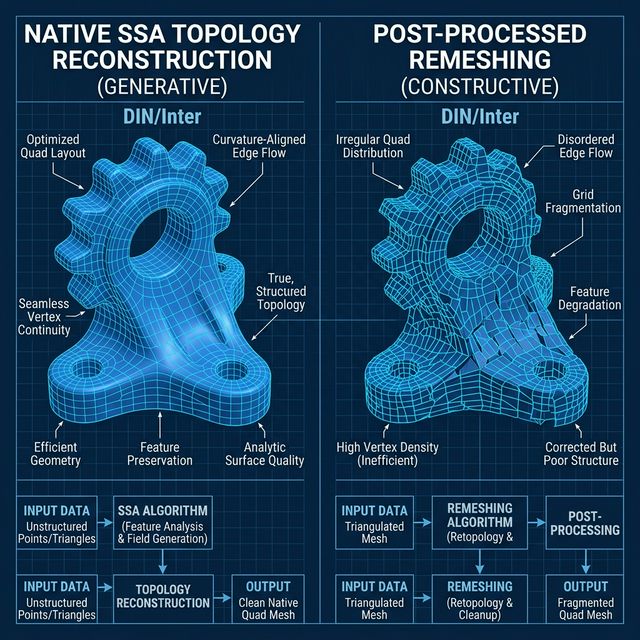
Another major shift in the Meshy vs Neural4D comparison is how users iterate. Standard tools often force a “generate and discard” loop, where users tweak a text prompt and hope for a better result.
Neural4D-2.5 introduces a conversational multimodal model that acts as a 3D modeling assistant. You can give direct natural language instructions to refine specific details, adjust material properties, or scale geometric proportions. This transforms the AI from a simple generator into a partner that understands the nuance of a production brief, a feature currently absent from the Meshy workflow.
Industry-Specific Precision: Watertight Meshes and API Customization
For those in 3D printing or high-end game development, the Meshy vs Neural4D debate ends at geometric integrity. N4D guarantees a “watertight” mesh directly from the core reconstruction engine. This is a critical requirement for physical production and physics-based simulations where non-manifold geometry causes immediate failure.
Furthermore, Neural4D provides enterprise API customization. Studios can fine-tune the model weights for specific vertical domains, such as high-fashion furniture or stylized anime characters. This allows for a level of brand-specific consistency that a generalist tool cannot match.
Link: Professional 3D Model AI Guide](https://blog.neural4d.com/image-to-3d/best-image-to-3d-model-ai/)
Link: 3D Asset Creation for Games](https://blog.neural4d.com/game/ai-3d-game-assets/)
Build for the Pipeline, Not the
The Meshy vs Neural4D decision ultimately hinges on your export needs. If your goal is a high-fidelity asset that fits seamlessly into Unreal Engine 5 or a 3D printing bed, the native volumetric logic of N4D is the superior choice. Join the early access today and experience the future of production-grade 3D generation.
Ready to skip the manual retopology?