
Your Inbox Is a Liability
Every time you hand over your email address, you’re handing over the skeleton key to your digital identity. By 2026, data brokers and trackers have turned that single string into a surveillance chain linking your bank, doctor, and social media. The best email privacy aliasing tools 2026 break that chain at source.
This guide ranks five solutions – from full encrypted mailboxes to lightweight forwarding services – based on real 2026 features, threat model coverage, and usability. You’ll learn exactly which tool (or combo) fits your risk level, how to set it up in minutes, and where each one fails. No fluff, no theory: just the tools that actually protect your inbox today.
1. Proton Mail – Best Overall Encrypted Email with Aliasing
Why Proton Mail tops our list
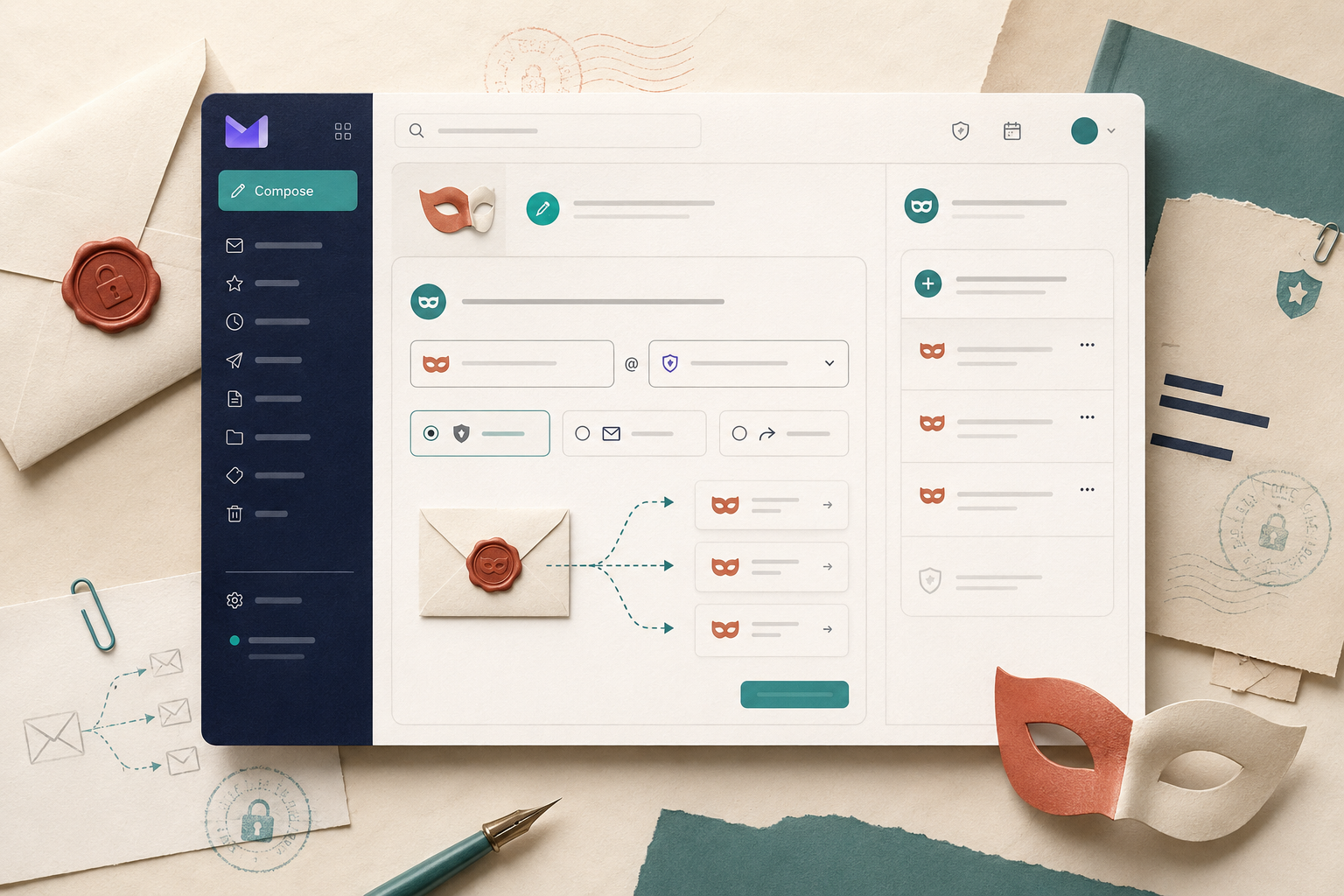
Proton Mail earns the top spot among the [best email privacy aliasing tools 2026] because it uniquely combines end-to-end encryption with a built-in aliasing powerhouse. You get zero-access encryption (even Proton can’t read your messages) and the ability to create unlimited aliases through its 2022 acquisition of SimpleLogin. For most threat models—from commercial tracking evasion to legal protection in non-hostile jurisdictions—this is the single best integrated solution. The Swiss jurisdiction adds a legal shield: Swiss privacy law and mandatory data retention exceptions mean your metadata is far harder to compel than in the US.
Key features
- Zero-access encryption: OpenPGP-based, with automatic key management. Your inbox is encrypted before it hits Proton’s servers.
- Integrated SimpleLogin aliasing: Create unlimited
@proton.meor custom-domain aliases directly in your account. Use forward-only or reverse-alias modes. - Proton Mail Gmail Forwarding Proxy (2026): Import Gmail without exposing your real address—Proton fetches mail server-side, strips tracking pixels, and delivers it encrypted.
- Full calendar, drive, and VPN integration in the Visionary plan.
- Open-source clients for iOS, Android, Windows, Mac, and Linux.
- Anonymous payment options: Bitcoin, cash, or prepaid cards.
Pricing and platforms
| Plan | Monthly Price | Aliases | Storage | Best For |
|---|---|---|---|---|
| Proton Free | $0 | 1 @proton.me + 10 SimpleLogin | 1 GB | Trying basics |
| Mail Plus | $3.99 | 15 @proton.me + unlimited SimpleLogin | 15 GB | Most individuals |
| Visionary | $29.99 | Unlimited all | 500 GB | Power users needing VPN+Drive |
All plans include web, desktop, and mobile apps. Free users get limited search and no IMAP/SMTP bridge.
What we’d improve
The free tier is stingy: 1 GB fills fast with attachments. IMAP bridge requires the $3.99 plan, locking out third-party clients for free users. And while SimpleLogin is powerful, its subdomain catch-all feature is buried in settings—not intuitive for newcomers. Read our full Proton Mail 2026 review.
2. SimpleLogin – Best Standalone Email Aliasing Service
Why SimpleLogin ranks second
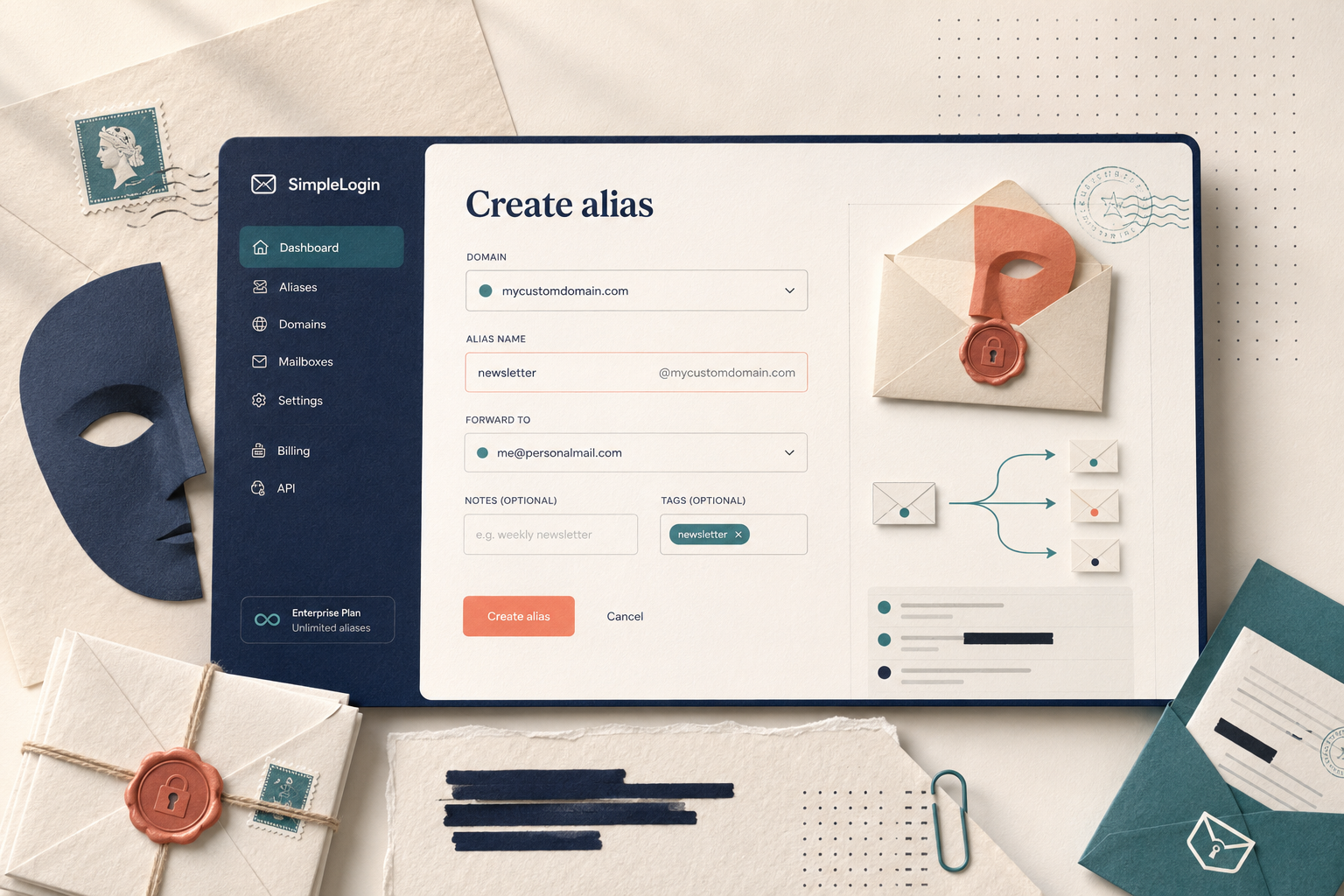
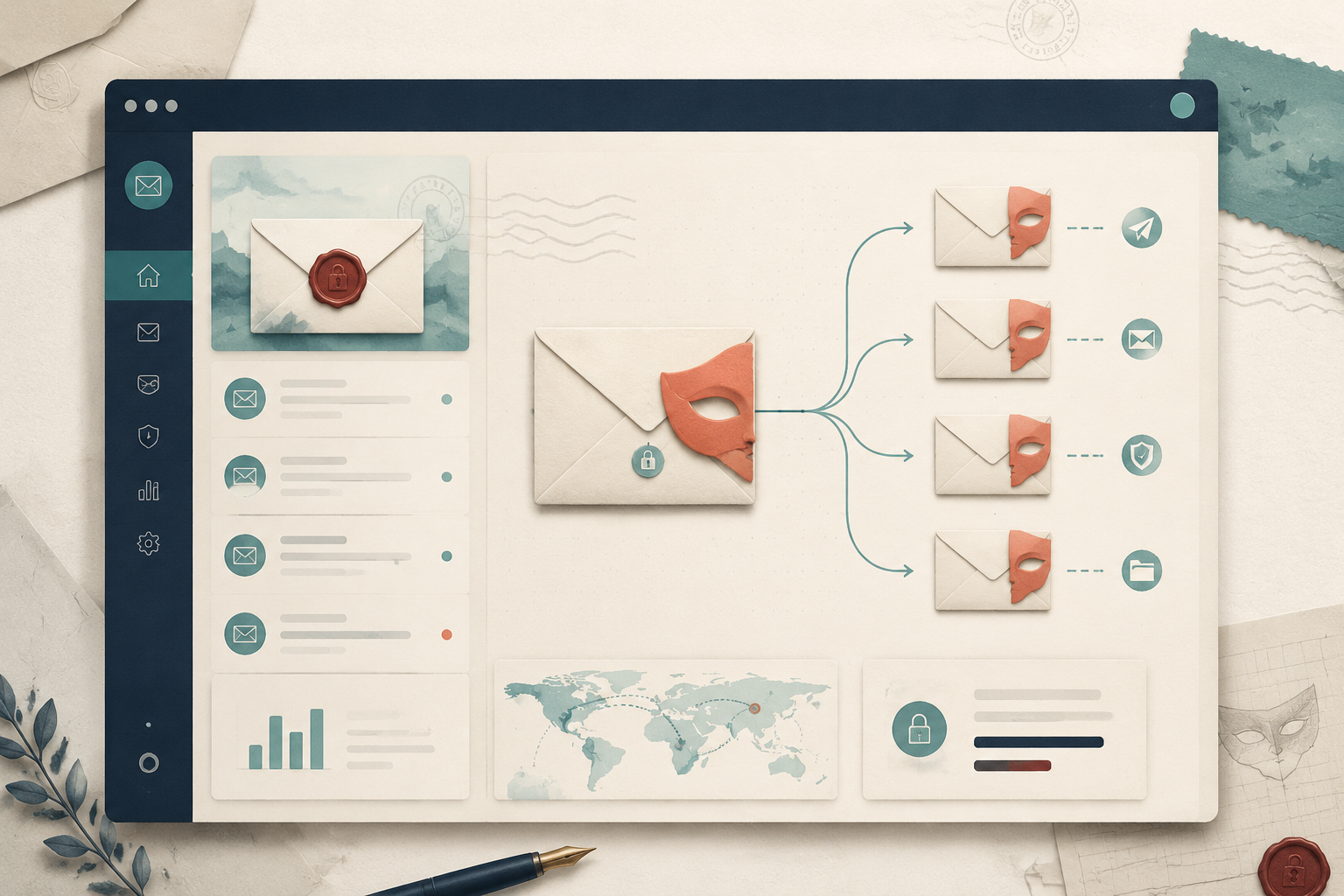
SimpleLogin is the Swiss Army knife of aliasing. It decouples your real inbox from every online account you create. Unlike Proton Mail’s integrated aliasing, SimpleLogin works with any email provider – Gmail, Outlook, Tuta, you name it. In 2026, its reverse alias system (reply from an alias without exposing your real address) remains the gold standard for operational security. For pure aliasing flexibility, it’s the best email privacy aliasing tool on the market.
Key features
- Reverse aliasing: Reply to forwarded emails from your alias. Your real address never leaks.
- Custom domains: Use your own domain (e.g.,
[email protected]) for professional aliasing. - Subdomain catch-all: Create
[email protected]on the fly – no manual alias creation needed. - Browser extensions: Chrome, Firefox, and Safari addons create aliases in one click.
- PGP encryption: Optional PGP encrypts forwarded emails end-to-end.
- Directory feature: Generate aliases via
+suffixor random strings for testing. - Self-hosting option: Deploy on your own server for total control.
Pricing and platforms
| Tier | Price | Aliases | Custom Domains | Self-Host |
|---|---|---|---|---|
| Free | $0 | 15 | 1 (limited) | Yes |
| Premium | $3.99/mo | Unlimited | Unlimited | Yes |
| Lifetime | $199 (once) | Unlimited | Unlimited | Yes |
Platforms: Web, iOS, Android, browser extensions. IMAP/SMTP bridge available for desktop clients.
What we’d improve
The free tier’s 15-alias cap feels stingy compared to addy.io’s unlimited free plan. The mobile app, while functional, lacks the polish of Proton’s suite. Setup for self-hosting requires Docker knowledge – not beginner-friendly. For most users, the $3.99 Premium plan is the sweet spot.
Read our full SimpleLogin 2026 review
3. Tuta – Best for Post-Quantum Encryption
Why Tuta takes third place
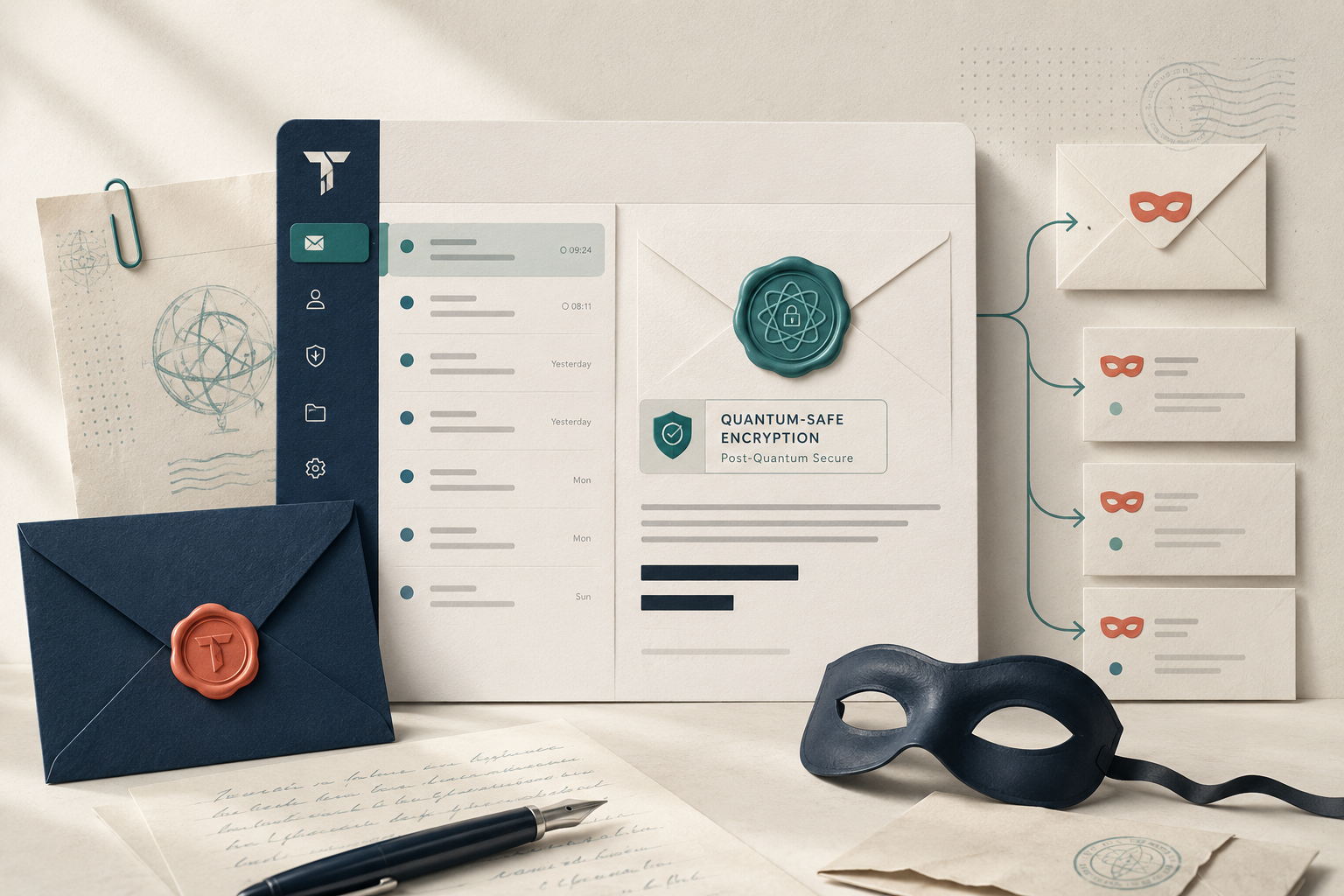
Tuta is the only major email provider with post-quantum encryption already live in 2026. If your threat model extends beyond today’s surveillance to future quantum decryption of stored emails, Tuta is your only choice in this list. Its zero-access architecture means Tuta can’t read your inbox – not even under legal order. But it lacks native aliasing, which limits its rank. You can create multiple mailboxes, but you won’t get the disposable, infinite alias workflow that Proton Mail + SimpleLogin or addy.io deliver. For the [best email privacy aliasing tools 2026](), Tuta is the specialist pick: unmatched encryption, limited aliasing.
Key features
- Post-quantum encryption: Combines Kyber and Dilithium algorithms to protect against future quantum decryption attacks. No other provider in this list offers this.
- Zero-access architecture: Tuta holds zero decryption keys. Even if compelled by German courts (jurisdiction: Germany), they cannot hand over your plaintext emails.
- Built-in calendar and contacts: All encrypted end-to-end, including event titles and attendee email addresses.
- No personal data required: Sign up with just a username and password. No phone number, no backup email.
- Open source: Full client code auditable on GitHub. Independent security audits published regularly.
Pricing and platforms
| Plan | Price | Aliases | Storage |
|---|---|---|---|
| Free | €0 | 1 mailbox | 1 GB |
| Revolutionary | €3/month (annual) | 5 mailboxes | 10 GB |
| Legend | €8/month (annual) | 15 mailboxes | 50 GB |
Platforms: Web, iOS, Android. No desktop app – you use the web client or a third-party bridge.

What we’d improve
No aliasing system. You get multiple mailboxes, not aliases. Each mailbox costs extra and requires separate login credentials. A true aliasing feature would let you spin up disposable addresses from a single account. Also, no IMAP/SMTP support – you’re locked into Tuta’s web and mobile clients unless you use the paid bridge.
4. addy.io – Best Open-Source Aliasing with Reverse Alias
Why addy.io is a top contender
addy.io is the most flexible open-source email aliasing service you can use in 2026. Its killer feature is reverse aliasing: when someone replies to an alias, the reply goes to your real inbox without ever exposing your real address. This fixes the biggest flaw in forward-only services (like Firefox Relay), where replying to a masked email can leak your identity. For the best email privacy aliasing tools 2026, addy.io is the technical user’s choice — especially if you want to self-host on your own server. The code is fully auditable, and the Lite plan is genuinely usable for free.
Key features
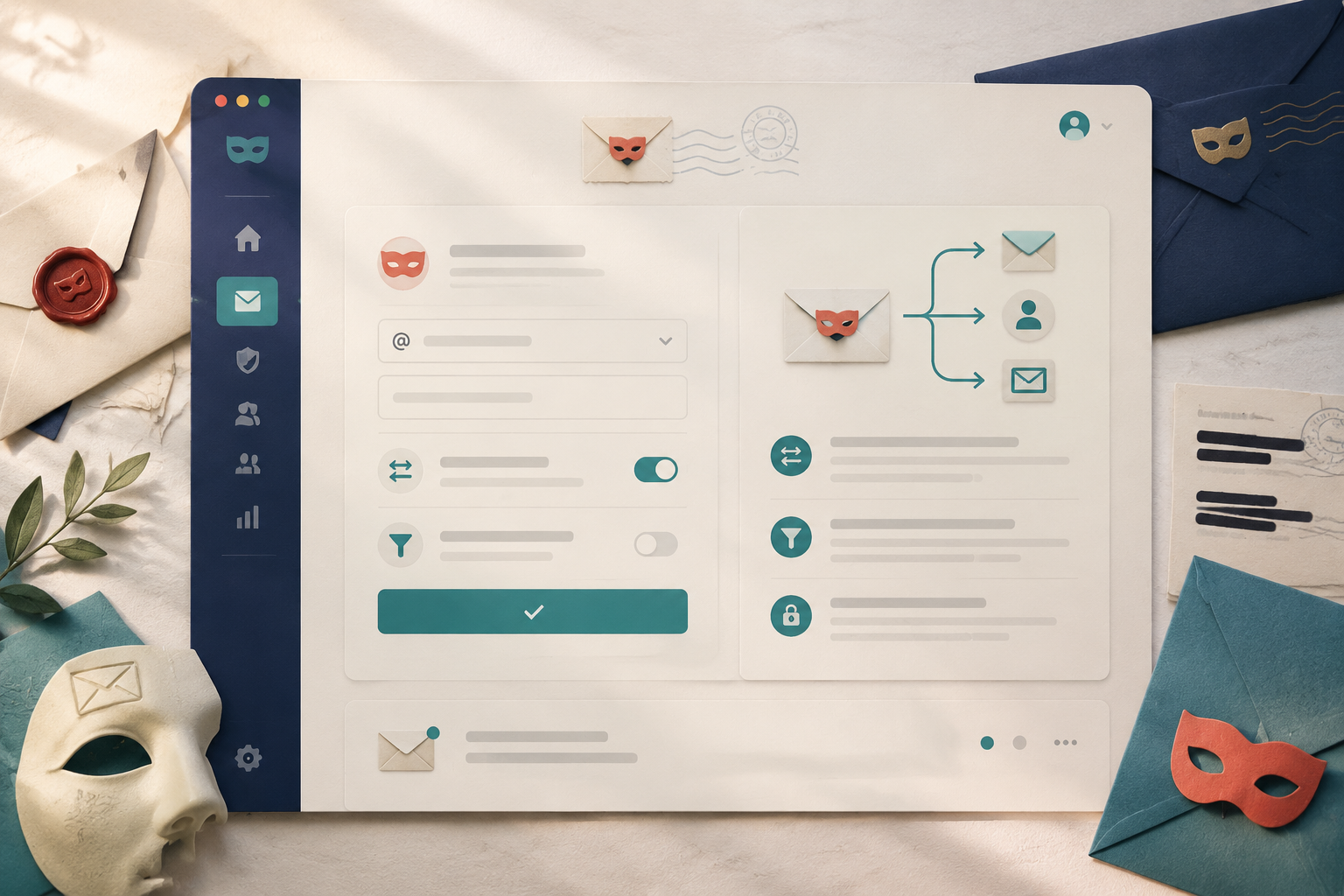
- Reverse aliasing: reply to emails sent to an alias without revealing your real address. Your reply shows the alias as the sender.
- Subdomain catch-all: create unlimited aliases on the fly (e.g.,
[email protected]). No need to pre-create each one. - Self-hosting option: deploy addy.io on your own server with Docker. Full data control, no third-party dependency.
- Encrypted forwarding: optional PGP encryption for forwarded emails. Supports key import or auto-generated keys.
- Rule-based filtering: route specific senders or domains to different mailboxes, auto-delete spam, or block senders.
Pricing and platforms
| Plan | Price | Aliases | Domains | Self-host |
|---|---|---|---|---|
| Free (Lite) | $0 | 10 shared | 1 shared | No |
| Premium | $1/month | Unlimited | Unlimited custom | No |
| Self-hosted | Free | Unlimited | Unlimited | Yes |
All plans include reverse aliasing and encrypted forwarding. Premium adds custom domains (bring your own @yourname.com). Self-hosting requires a server with Docker, but gives you total sovereignty. Apps: web, iOS, Android, and browser extensions for Chrome, Firefox, and Edge.
What we’d improve
The free tier’s 10 alias limit is stingy compared to SimpleLogin’s 15. The UI, while functional, feels dated — less polished than Proton’s or SimpleLogin’s. And reverse aliasing can confuse new users; the documentation assumes you already understand email forwarding mechanics. See our full addy.io review for setup tips.
5. DuckDuckGo Email Protection – Best for Ease of Use
Tagline: Effortless privacy layer for the everyday user
Why DuckDuckGo Email Protection rounds out the top 5
If you want to stop tracker-filled newsletters and marketing emails without learning a single privacy concept, DuckDuckGo Email Protection is your tool. It’s the only service here that doesn’t require you to choose a separate alias provider or manage encryption keys. It strips hidden trackers from inbound emails before they reach your real inbox, then forwards the clean message to your existing Gmail, Outlook, or iCloud address. For the non-technical reader of this best email privacy aliasing tools 2026 guide, it’s the easiest on-ramp to a more private inbox.
Key features
- Automatic tracker removal: Inbound images and links are scanned and scrubbed of tracking pixels and URL-based identifiers before forwarding. DuckDuckGo claims this removes most common commercial trackers.
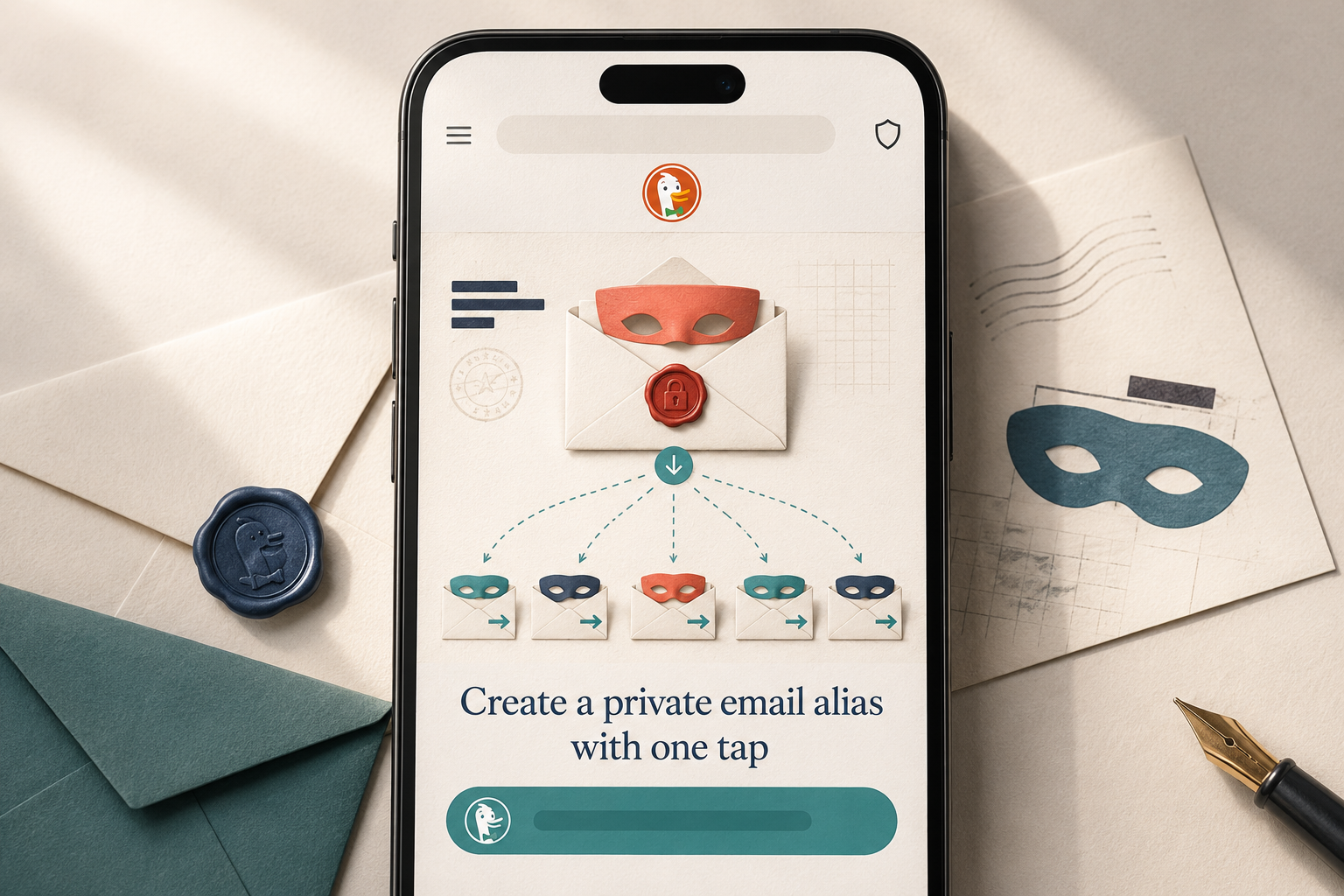
- On-the-fly alias creation: Generate a unique
@duck.comalias from the DuckDuckGo mobile browser or desktop extension with one tap — no dashboard, no setup. - Reply with privacy: When you reply to a forwarded email, your reply goes through DuckDuckGo’s servers, so your real email address stays hidden from the original sender.
- Zero data retention: DuckDuckGo does not log your IP address or store your emails after forwarding. Their privacy policy is audited annually.
- No account needed: You only need the DuckDuckGo browser or extension — no separate sign-up for the email protection feature.
Pricing and platforms
| Feature | DuckDuckGo Email Protection |
|---|---|
| Free tier | Unlimited aliases, unlimited forwarded emails |
| Premium tier | None (completely free) |
| Platforms | DuckDuckGo browser (iOS, Android), browser extension (Chrome, Firefox, Edge, Brave) |
| Encryption | None (tracker removal only) |
| Aliasing method | Forward-only (no reverse alias) |

What we’d improve
DuckDuckGo Email Protection is strictly a forwarding service with zero encryption. If your threat model includes legal compulsion or state surveillance, this tool won’t help — your emails still sit unencrypted on Gmail’s servers. You also can’t create aliases from a web dashboard or manage them in bulk. For a deeper look at its limitations, read our full DuckDuckGo Email Protection review.

Honorable Mentions: Beyond the Top 5, These Are Worth Knowing
Firefox Relay – Simple but Limited Forward-Only Aliases
Mozilla’s Firefox Relay is the easiest on-ramp to email aliasing if you already use Firefox. You get five free aliases that forward to your real inbox, and Relay strips tracking pixels before messages land. The premium plan ($1.99/month) unlocks unlimited aliases and a custom domain. But there’s a catch: Relay is forward-only – you can reply from your alias, but the reply comes from a random Relay address, not your actual alias. That breaks thread continuity and confuses contacts. It also lacks reverse-aliasing (addy.io’s signature feature) and zero-access encryption. For casual spam avoidance, Relay works. For a serious privacy tool in your 2026 stack, it’s a stepping stone, not a destination.
Disroot – The Radical Community-Owned Email
Disroot isn’t trying to be your commercial privacy provider. It’s a cooperatively owned, non-profit platform run by volunteers in the Netherlands. Your email is encrypted at rest with OpenPGP, and you get 1GB of storage for free (donations keep the lights on). Disroot also bundles Nextcloud, Etherpad, and XMPP chat – a full ethical workspace. The trade-offs: no native email aliasing (you’d pair it with SimpleLogin or addy.io), no IMAP bridge for third-party clients, and a slower pace of updates. The webmail interface is functional but dated. If you want to support a radical alternative to Big Tech and don’t mind a no-frills experience, Disroot is a principled choice. For most people, the top 5 deliver more utility with less friction.
How email aliasing and encrypted inboxes actually stop trackers
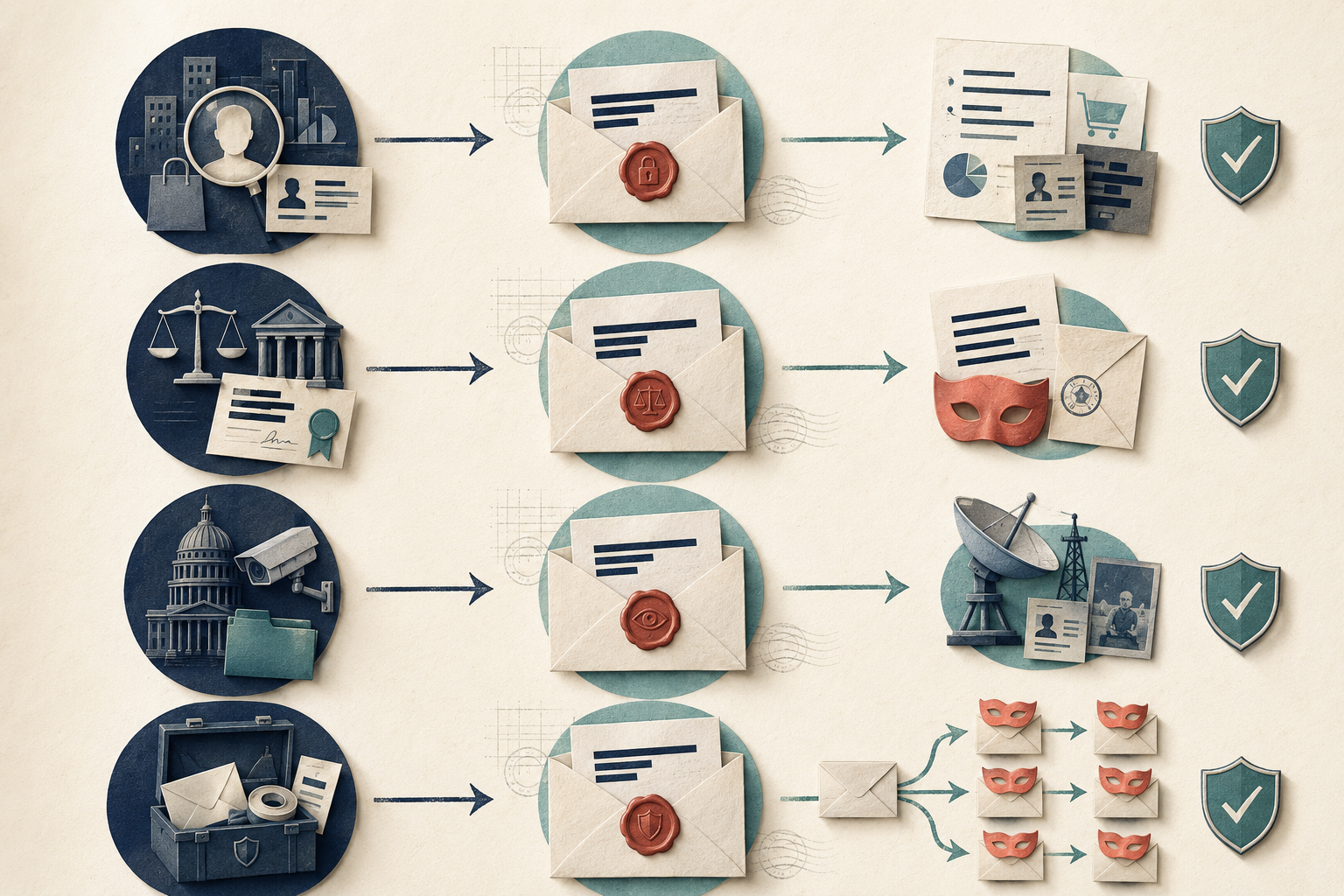
To understand what these tools actually do, you need to map them against real threat tiers. The first tier is pseudonymous tracking. You sign up for a newsletter with a fake name on Gmail. Google still records your IP, browser fingerprint, recovery phone, and payment details. That fake name is useless. Aliasing solves this by giving each service a unique, random address. The newsletter gets [email protected]. That address is a one-way forwarder. If it gets sold to a broker, the broker can only spam that alias. They cannot correlate it with your [email protected] or [email protected]. Your primary inbox stays invisible.
The second tier is commercial profiling via a single permanent address as a correlation key. Ad brokers and data aggregators use your email as a universal ID. They cross-reference it across data breaches, purchase histories, and social media. A single address is a skeleton key to your entire digital life. Aliasing shatters that key into hundreds of fragments. Each service sees a different address. No central identifier exists. Even if one alias is compromised in a breach, the attacker cannot pivot to your other accounts. This is the core value proposition of aliasing: identity compartmentalization.
The third tier is legal compromise. A court order forces a provider to hand over your data. Zero-access encryption (used by Proton Mail and Tuta) means the provider cannot read your stored emails. They can only hand over encrypted blobs and metadata. That metadata still includes sender, recipient, timestamps, and IP addresses. Aliasing does not protect metadata. If you use an alias with a provider that logs IPs, that IP can be subpoenaed. To counter this, you must route traffic through Tor or a VPN before reaching the alias service. SimpleLogin and addy.io do not hide your IP by default. You must layer that protection yourself.
The fourth tier is total surveillance by a state actor. Against a well-funded intelligence agency with zero-day exploits and global network taps, no email tool is safe. Encrypted email lacks forward secrecy. If your private key is ever compromised, all past messages can be decrypted. Aliasing cannot help here. At this threat level, you need off-grid operational security: cash payments, Tor-only access, and end-to-end encrypted messengers like Signal that avoid email protocols entirely.
In short: aliasing stops commercial tracking and identity correlation. Zero-access encryption stops the provider and legal orders from reading your content. Neither stops metadata leakage or nation-state attacks. Use both together, but understand their limits.
Aliasing service or private mailbox: which do you actually need?
This is the most common question I get, and the answer depends on your primary adversary. If your main concern is spam, data brokers, and cross-site tracking, an aliasing service like SimpleLogin or addy.io is all you need. You keep your existing Gmail or Outlook inbox, and you route all new sign-ups through aliases. The alias service forwards mail to your real inbox, optionally encrypting it with PGP along the way. Your real address never gets exposed. Cost: $0 to $4/month. Setup: 15 minutes. You get unlimited unique addresses, custom domains, and per-alias toggle on/off. For 90% of people, this is the right answer.
If your threat model includes your email provider itself reading your mail, or you want to prevent the provider from building a profile on you, you need a private mailbox like Proton Mail or Tuta. These providers use zero-access encryption: they cannot decrypt your stored messages. But this comes with trade-offs. Tuta locks you into its proprietary apps. Proton Mail gives you OpenPGP interoperability but leaves subject lines unencrypted. Both cost $3-5/month for a basic paid plan. Migrating from Gmail is a pain. You lose Google’s spam filtering, search, and integration with third-party services. Private mailboxes are better for privacy but worse for convenience.
There is a hybrid approach: use a private mailbox as your primary inbox and an aliasing service on top. Proton Mail owns SimpleLogin, so the integration is seamless. You get zero-access storage for your core mail and aliasing for all external sign-ups. This is the strongest consumer setup available in 2026. But it costs $8-10/month total. For most readers, that is overkill.
One critical risk with aliasing services: downgrade. If you stop paying for SimpleLogin Premium, your aliases stop forwarding. You lose access to accounts tied to those addresses. Some services offer a grace period, but not all. addy.io, for example, limits free users to 10 aliases and 1 domain. If you exceed that and cancel, your aliases are suspended. Always export your alias list and have a recovery plan. Private mailboxes do not have this problem. You pay or you lose everything.
PGP forwarding is a feature worth understanding. SimpleLogin and addy.io can encrypt forwarded mail with your PGP key before sending it to your inbox. This protects the email body from the alias service itself and from intermediate servers. If you trust your alias provider, this is optional. If you do not, enable it. But PGP forwarding requires you to manage your own private key. Most users skip this. That is fine for stopping commercial trackers, but not for preventing the alias provider from reading your mail.
Final advice: if you just want to stop spam and data brokers, use an aliasing service with your existing inbox. If you want to hide your email content from your provider, switch to a private mailbox. If you want both, pay for the combo. Do not overbuy.
Should you self-host your own email instead?
Self-hosting email sounds like the ultimate privacy move. You control the server, the software, and the data. No third party can read your mail. No jurisdiction can compel a provider you own. In practice, self-hosting email in 2026 is a nightmare of technical debt, deliverability headaches, and ongoing maintenance. I have done it. I do not recommend it for anyone who is not a sysadmin.
Let’s start with the software stack. The most common options are Mailcow, Mail-in-a-Box, and Docker-Mailserver. Mailcow is the most polished, with a web UI for managing domains, aliases, and spam filters. Mail-in-a-Box is simpler but less flexible. Docker-Mailserver is for people who love YAML files. All three require a server with at least 2 GB of RAM and 20 GB of storage. You will also need a domain, a static IP, and reverse DNS (rDNS) configured to match your server’s hostname. Without proper rDNS, many mail servers will reject your outgoing mail outright.
Then comes the email authentication gauntlet. You must publish SPF records listing your sending IPs, DKIM signatures to sign outgoing mail, and DMARC policies to tell receiving servers how to handle failures. One mistake and your mail lands in spam folders. Even if you get it right, large providers like Gmail and Outlook use reputation scoring. A new IP with no sending history is treated as suspicious. You will need to warm up the IP by sending small volumes of legitimate mail over weeks. If you ever send a newsletter or transactional email from that IP, you risk blacklisting.
Port 25 blocking is another hurdle. Many residential ISPs and cloud providers block outbound port 25 to prevent spam. You need a business-grade ISP or a VPS provider that allows SMTP traffic. DigitalOcean, Linode, and Vultr all block port 25 by default. You must request an exception, and they may deny it. AWS SES is an option, but then you are back to relying on a third party.
Spam filtering is a full-time job. Open-source filters like Rspamd or SpamAssassin work, but they require tuning. False positives will happen. You will miss important emails. You will spend weekends debugging why your mail to a friend at Proton Mail is bouncing. And if your server is compromised, you become a spam relay. That gets your IP blacklisted globally. Recovery takes months.
There is also the legal side. If you self-host, you are the data controller. You must comply with GDPR if you serve EU users. You need to handle data subject access requests and breach notifications. Most individuals ignore this, but it is a real risk.
Honest verdict: self-hosting email is only worth it if you are a privacy extremist with sysadmin skills, a static IP, a clean reputation, and time to babysit a server. For everyone else, a paid Proton Mail or Tuta account costs $3-5/month and saves you dozens of hours. The privacy gain from self-hosting is marginal because zero-access providers already cannot read your mail. The convenience loss is enormous. Do not self-host email unless you really, really know what you are doing.
How to choose the best email privacy aliasing tool for you
Your threat model dictates your pick. Here is the short version of our 2026 findings.
If you need maximum encryption and aliasing in one
Proton Mail + SimpleLogin is the only integrated suite that gives you zero-access encryption, unlimited aliases, and a Swiss jurisdiction. You pay $11.99/month for Proton Unlimited (15 aliases, 500GB storage) – the best email privacy aliasing tools 2026 ranking puts this combo at #1 for a reason.
If you want a lightweight aliasing add-on
addy.io is free for 10 aliases with reverse aliasing – meaning you can reply from your alias without exposing your real address. DuckDuckGo Email Protection is even lighter: install the browser extension, get a @duck.com alias, and let it strip trackers before forwarding to your existing inbox. Both work with any email provider.
If you’re concerned about future quantum threats
Tuta uses post-quantum encryption (CRYSTALS-Kyber + Dilithium) already live in 2026. It lacks native aliasing, but you can pair it with SimpleLogin ($3.99/month) for unlimited aliases. Tuta’s German jurisdiction and zero-knowledge architecture make it the best pick against state-level adversaries.
If you prefer open-source and self-hosting
addy.io is fully open-source (AGPLv3) and can be self-hosted on your own server. You control the database, logs, and infrastructure. For 2026, addy.io also added encrypted alias notes and wildcard catch-alls. This is the choice for OPSEC-heavy users who want zero third-party trust.
If you want the simplest setup
DuckDuckGo Email Protection requires zero account creation beyond your browser. Install the extension, generate @duck.com aliases on any signup form, and DuckDuckGo strips trackers before forwarding. No encryption, no storage – just instant privacy for $0. Perfect for non-technical users who just want less spam.
Frequently asked questions
What is email aliasing and how does it protect privacy?
Email aliasing creates unique, disposable email addresses that forward to your real inbox. This hides your actual email address from senders – if a company suffers a data breach, you simply delete that alias instead of changing your primary email. Services like SimpleLogin and Addy.io let you generate unlimited aliases, so each website or newsletter gets its own distinct address.
Can I use an aliasing service with my existing email provider?
Yes – aliasing services work as a forwarding layer on top of any email provider. You connect your Gmail, Outlook, or Proton Mail account, and all replies sent to your aliases automatically route back to that inbox. SimpleLogin, for instance, integrates directly with Proton Mail and supports custom domains starting at $30/year.
Do I need both an encrypted email provider and an aliasing service?
Not necessarily, but the combination offers the strongest privacy setup. An encrypted provider like Proton Mail or Tutanota protects the contents of your emails from the provider itself, while aliasing prevents companies from linking your real address across services. For most people, a good aliasing service with a standard provider is sufficient – encrypted email is overkill if you aren’t handling sensitive communications.
Are free email aliasing services safe?
Yes, but with trade-offs. SimpleLogin’s free tier gives you 15 aliases, and Addy.io’s free tier offers 20 aliases – both are open-source and have undergone security audits. The risk isn’t safety, but feature limits: free plans typically cap aliases, don’t support custom domains, and may not include catch-all or directory features.
How do I set up a reverse alias?
A reverse alias is a special address that lets you reply to forwarded emails without revealing your real email. In SimpleLogin, open any alias in your dashboard and click “Reverse-Alias” – the service generates a unique reply-to address for that conversation. You then set that address as the reply-to in your email client, so the recipient sees your alias, not your actual inbox.
Final verdict
Protecting your inbox in 2026 means layering defenses. For most people, the best email privacy aliasing tools 2026 start with Proton Mail + SimpleLogin: unmatched encryption plus unlimited aliases. Tuta wins if post-quantum security is your priority. addy.io offers the most flexible open-source aliasing for power users. DuckDuckGo Email Protection delivers zero-effort spam blocking without an account. Pick based on your threat model – but don’t pick none. Your email is still the universal identifier. Read our threat tier guide to match your risk level.